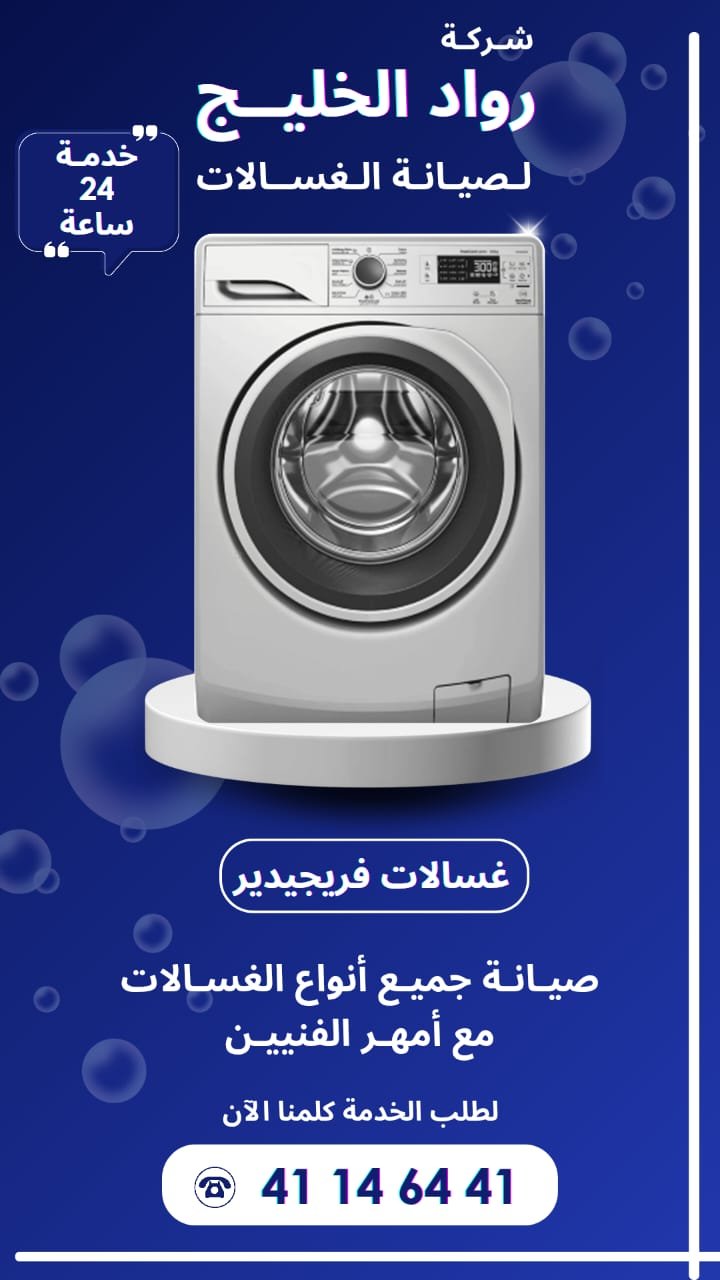
Automatic Washing Machine Repair – Hawalli | 24-Hour Service
The automatic washing machine is no longer a luxury—it has become an essential in every home, especially in crowded areas like Hawalli. But when it suddenly breaks down, the confusion begins: should I buy a new one? Or look for a technician to fix it? Most people don’t realize that many malfunctions are simple and can be resolved with the touch of a skilled technician. And with the availability of technicians who offer 24-hour automatic washing machine repair services, the solution is closer than you imagine, and easy for everyone even during emergencies.
Most Common Washing Machine Problems for Residents of Hawalli
In the Hawalli area, with the heavy usage of appliances, many people suffer from frequent malfunctions in automatic washing machines. And although some problems are simple, ignoring them or dealing with them in an unprofessional manner may cost the homeowner bigger repairs—or even replacing the entire machine. That’s why it’s necessary to know what the most common faults are and how to act as soon as you notice them.
The most common problems customers in Hawalli suffer from include:
- The washing machine doesn't turn on at all despite being plugged in.
- Annoying noise or strong vibration during the spin cycle.
- Water remains in the drum and doesn't drain.
- The washing machine draws too much water or none at all.
- Water leakage from underneath the machine or the door.
- A bad odor comes from inside the drum after washing.
- The washing machine stops midway through the cycle and doesn’t complete.
- The drum doesn’t spin even though the machine is full.
- Control panel displays error codes or doesn’t respond.
- The door doesn't open after the cycle ends.
- The machine spins but clothes come out very wet.
- Water remains cold even when choosing a hot water cycle.
- Clothes come out with detergent residue or a strange smell.
- The washing machine filter is clogged, causing drainage issues.
- The washing machine trips the power repeatedly during operation.
These problems aren’t just annoying—some of them cause damage to clothes or even harm the home’s electrical system. With continued usage without maintenance, the issues may accumulate and transform from simple to complex.
But the good news is that many of these faults can be resolved quickly if you contact a professional washing machine repair technician in Hawalli. An experienced technician can accurately determine the cause of the malfunction, whether it's electrical, related to the water pump, sensors, or even programming.
What’s special about automatic washing machine repair services in Kuwait—especially in an area like Hawalli—is the fast 24-hour response. You don’t need to wait two or three days. So even if the machine breaks down in the evening or over the weekend, you can still get immediate support.
Also, one of the most common problems people face is trying to fix it themselves or hiring unqualified individuals. This often leads to worsening the problem or damaging other parts of the machine. That’s why we always say: don’t try to fix it yourself if you’re not an expert—leave it to the professionals.
Paragraph Summary:
Common issues include the machine not working, loud noises, water leaks, or control panel malfunctions. The best solution is to handle these issues immediately through a certified technician to avoid further complications.
Final Note:
If you face one of these problems, don’t delay or wait—especially if the machine is used daily. Calling a washing machine technician in Hawalli quickly can save you money and effort and keep your appliance running for many more years.
How to Choose a Trustworthy Washing Machine Technician in Your Area
Choosing a reliable automatic washing machine technician in the Hawalli area isn’t just a matter of convenience—it’s a matter of safety and trust in the device you use daily. Many people, when their washing machine breaks down, search randomly on the internet or rely on a recommendation from someone without verifying the technician's experience or accreditation. This can lead to negative outcomes such as repeated malfunctions, damage to other parts, or even spending a large amount without a satisfying result.
To avoid all these problems, you need to follow clear steps that help you choose a professional washing machine repair technician—especially if you live in an area like Hawalli, which has many technicians and repair centers. To make things easier for you, here are the top criteria you should consider:
- Licensing and Accreditation: Make sure the technician works through a licensed and known service center or has an approved professional record.
- Practical Experience: The technician must have years of experience in repairing automatic washing machines of all types, especially modern models.
- Knowledge of Common Malfunctions: Whether it’s an electrical problem, a sensor issue, or a drain pump fault, an experienced technician can diagnose it quickly.
- Availability of Original Spare Parts: A technician who works within a service center network ensures access to original spare parts—not commercial or counterfeit ones.
- Emergency Service: Not all technicians provide round-the-clock service, so look for those who are available at any time, especially in case of sudden breakdowns.
- Service Guarantee: Make sure you receive a clear invoice and a written warranty on the part or repair performed, even if it was a minor fix.
- Good Reputation: Ask people around you or check previous customer reviews online or on Google Maps.
- Quick Response: A technician located in the same area (Hawalli) means faster response—sometimes within less than an hour.
- Transparent Pricing: A professional technician provides a clear quote from the beginning and doesn’t increase the price later without reason.
- Specialized Tools: Using modern diagnostic tools speeds up the repair process and prevents guesswork or random part replacement.
Since most Hawalli residents use modern automatic washing machines (like LG, Samsung, Whirlpool, Frigidaire), choosing a technician who understands electronic operating systems and smart control panels has become very important. It’s no longer just a matter of a tub and a motor—now we have programming, sensors, and multiple cycles that require special expertise.
One common mistake homeowners make is relying on a random technician who advertises extremely cheap services. Although the price may seem tempting, the problem often recurs, or the technician replaces a part with low quality, or doesn’t provide a warranty—causing you to lose both time and money.
One advantage of certified technicians in the Hawalli area is that they’re familiar with common problems due to their daily interaction with residents. Often, they don’t need much time to diagnose the issue and can reach a solution quickly. Moreover, they often provide washing machine cleaning and a full checkup even if you only requested a simple repair—which is, in itself, long-term savings.
And don’t forget that having technical support service after the repair—such as follow-up or answering your questions—is a clear sign of a professional technician. A technician who values their reputation doesn’t end the relationship with the customer after the job is done but stays in touch in case the same issue returns or a new concern appears.
Since many people rely on their washing machines daily, having a technician nearby brings great relief in emergencies. If the machine breaks down at night or before an event, you can call and get a response the same day—and this service isn’t available everywhere.
Paragraph Summary:
Choosing the right technician isn’t a matter of luck—it requires attention to licensing, experience, reviews, pricing, and communication. A professional technician saves you from repeated issues and provides a safe, fast repair service.
Final Note:
Don’t choose the cheapest—choose the most trustworthy. A good technician gives you real value and extends your machine’s lifespan, instead of you suffering from repeated repairs that cost you more in the long run.
Malfunctions Caused by Frequent Power Outages
Frequent power outages are among the most common problems faced by residents of Hawalli, especially during the summer or when there’s high electrical load. The problem is not just annoying—it has a big impact on electrical appliances, especially automatic washing machines. And to be clear, many of the malfunctions people complain about are originally caused by sudden power cuts or returns.
Modern automatic washing machines rely on precise electronic systems, including control boards, programming, and sensors that require a stable and consistent current. So every time the power is cut off suddenly or returns with high voltage, there is major stress on these circuits—and this is where problems begin.
Let’s go over some of the common malfunctions caused by this issue:
- Burnt Control Board (PCB): One of the most common faults, and often requires full replacement.
- Timer or Sensor Failure: Sensitive parts like the heat or water level sensor are affected by electrical fluctuations.
- Washing Machine Motor Damage: The motor can overheat or get damaged due to sudden voltage changes.
- Machine Doesn’t Respond to Power-On: The machine turns off completely or starts but doesn’t complete the cycle.
- Error Codes Appear on the Screen: Such as error codes dE, LE, or UE, indicating failure in the system.
- Power Cable Disconnect or Plug Damage: Many discover the issue is with the cable or power source—not the machine itself.
- Door Lock Malfunction: Especially if the power goes out during spin or fill cycles.
- Burnt Smell or Clicking Sound on Startup: A sign of internal damage from previous power outage.
- Water Drain Pump Failure: If the power goes out during pump operation, water can accumulate inside the machine.
- Washing Cycle Not Completing: The machine restarts or stops suddenly.
These malfunctions may appear immediately after a power cut, or accumulate over time until they cause major damage. To protect yourself, you need to follow a few practical tips to preserve your machine:
- Use a voltage stabilizer made for washing machines.
- Unplug the machine if you feel the current is unstable or during thunder/lightning.
- Don’t run the machine immediately after power returns—wait 5 to 10 minutes.
- Check the main power source—especially if you have other devices running at the same time.
- Have an electrician check the load distribution if you’re experiencing repeated faults across multiple devices.
- Install a protection fuse or dedicated circuit breaker for the washing machine.
- Don’t use cheap power extensions or ones without grounding.
- Have your washing machine technician inspect the device periodically, even if no problem is visible.
- Keep the number of an emergency technician who can reach you quickly if a sudden power issue occurs.
It’s well known that power outages won’t completely go away—but at least we can deal with their effects smartly. Modern washing machines are expensive, and their electronic components are sensitive, so we can’t risk leaving them exposed to damage without protection or follow-up.
And sometimes, even if the fault occurs, you can fix it easily if you act quickly and don’t leave the device plugged in or running after the power comes back. Some people ignore the issue and continue using the machine while there’s a minor fault—until it turns into a very costly malfunction.
The advantage of specialized technicians in Hawalli is that they deal with such cases almost daily, and they know how to distinguish if the fault is from electricity or from the machine itself. Some faults require part replacement, and others just need precise electronic maintenance.
Paragraph Summary:
Power outages are a main cause of automatic washing machine malfunctions—especially with control boards and motors. Quick and preventive action reduces damage and protects your appliance from breakdown.
Final Note:
Don’t wait until your appliance fails due to repeated outages. Act in advance—install protection systems and keep a trusted technician on hand to check the machine regularly.
The Role of Preventive Maintenance in Reducing Sudden Failures
Many people in Hawalli don’t care about washing machine maintenance unless it breaks down—but the truth is, preventive maintenance saves you time, effort, and money. When you service your washing machine regularly, the chances of sudden malfunctions decrease, and the machine’s performance and efficiency are preserved for the longest time possible. What’s surprising is that preventive maintenance isn’t complicated—it just needs awareness and making it part of your routine.
Your washing machine works daily—maybe more than once a day. Over time, dirt accumulates, limescale builds up, parts weaken—and this causes issues if not caught early. That’s where preventive maintenance comes in—to help you avoid major, costly malfunctions.
Let me tell you what effective preventive maintenance includes:
- Cleaning the internal and external filters about once a month—hair, lint, and small objects collect there and can block water flow.
- Checking the drain hose to ensure it’s not twisted or strained, as damage or blockage causes leakage.
- Running an internal cleaning cycle with no clothes periodically using white vinegar or a special cleaner—to remove residue and bacteria.
- Paying attention to strange noises or unusual vibration—it could indicate motor or mounting problems.
- Inspecting the door hinges and rubber seals for cracks that cause water leakage.
- Checking for water leakage under the machine after each use—this indicates internal issues.
- Monitoring spin performance—if it feels weaker, inspect the rotation system.
- Checking electrical connections and wires—especially if you live in an area with frequent outages.
- Ensuring the detergent drawer is clean—powder or gel buildup prevents proper distribution.
- Cleaning the rear fan or cooling vents (if present), as they help cool the motor.
These steps don’t take much time—but they significantly impact the washing machine’s lifespan. People who follow them rarely call emergency technicians because they reduce the chance of failure from the start.
In addition to what you can do yourself, there’s preventive maintenance that must be done by a specialist every 6–12 months, like:
- Checking the motherboard and programming it to ensure no errors.
- Testing the stability of the wash cycle and drum balance.
- Measuring drain efficiency and spin speed.
- Ensuring there are no limescale deposits inside.
- Examining incoming water pressure and making sure it’s regulated.
- Updating software if the washing machine is smart or electronic.
Having a trusted maintenance technician in Kuwait—especially in Hawalli—saves you a lot. They don’t just repair—they give you advice based on your machine type, because every brand has different characteristics. For example, Samsung washers have different sensitivities than Whirlpool, and Frigidaire has a totally different programming setup.
Common mistakes people make include:
- Saying “it’s fine, still working” and ignoring minor sounds or problems.
- Overloading the machine and repeating the same program constantly.
- Using the wrong detergent type—which causes excessive foam.
If you neglect these details, malfunctions are guaranteed. The motor could fail or the control board might burn out, forcing you to pay a large amount. Why wait until that point—when you could detect and fix everything early?
Let’s put it simply:
People who maintain their machines don’t fear breakdowns.
Not only that—preventive maintenance also saves electricity and water, since a clean and healthy machine runs more efficiently.
Paragraph Summary:
Preventive maintenance isn’t a luxury—it’s a necessity. It ensures longer machine life, stable performance, and more safety. Simple home steps and regular professional inspections save you from future expensive repairs.
Final Note:
Don’t wait for the washing machine to break down to start maintaining it—be proactive. Make maintenance part of your monthly routine, and have a specialist check it at least once every 6 months.
Tips to Reduce Water and Electricity Consumption in Washing Machines
With rising electricity and water bills in Kuwait, many people in Hawalli started asking: how can we save on washing machine usage? Especially since the washing machine is one of the most used appliances in the house. The solution is easy and simple—all it needs is some awareness and practical tips applied consistently.
Old machines consume more water and electricity than new ones—but even modern ones, if not used properly, may use more than necessary. So, here are real ways to reduce your bills without compromising laundry cleanliness:
- Use the Eco Mode program if available—it’s designed to work at lower temperatures and consume less energy.
- Wash full loads instead of small ones—every wash cycle uses water and electricity, so get the most out of it.
- Avoid hot water unless necessary—like heavily soiled clothes—because heating water consumes lots of energy.
- Use appropriate detergent for automatic machines and in moderate amounts—excess foam impedes rinsing and causes extra cycles.
- Clean the washing machine filter regularly—this preserves drainage efficiency and prevents extra power use due to partial blockage.
- Choose energy-efficient washers (e.g., A+++) when buying—they consume up to 30% less power than others.
- Unplug the machine after use—some devices consume electricity even in standby mode.
- Run the machine during off-peak times (e.g., evening or early morning) to reduce pressure on the grid—sometimes it even costs less.
- Check spin cycle performance—wet clothes take longer in the dryer, increasing electricity usage.
- Use cold water for regular washes—most daily dirt doesn’t need hot water, and cold saves heater energy.
Following these tips can make a huge difference over the month. Some people reported a 15–20% drop in their bills just from changing laundry habits. You don’t need the latest machine—the important thing is knowing how to use it efficiently.
Not only bills—even your washing machine’s lifespan improves if it operates efficiently, meaning fewer repairs in the future. And when the machine isn’t overworked, internal parts last longer, and the motor stays in excellent condition.
Let’s clarify with an example:
If you wash three times daily with half loads, and switch to washing once with a full load—you’ll save about 60% in water and energy that day. Imagine that over a full month!
And for those living in apartments or family housing in Hawalli, applying these tips even helps reduce strain on the home’s plumbing and electrical systems—minimizing the chances of leaks or short circuits.
Also, some smart machines today display energy usage per cycle—so if you track the screen and compare options, you can choose what suits your load and clothes.
If you have kids or elderly at home and do frequent laundry, it’s best to choose short, low-temperature programs—they’re enough for daily cleanliness and save power.
Paragraph Summary:
Electricity and water consumption in washing machines can drop significantly if the device is used smartly. From choosing the right program, to adjusting load size, using cold water, and timing operation—each step counts and reflects in your bill and device health.
Final Note:
Being aware of how you use your washer is not only a financial benefit—it’s also a contribution to preserving the environment and reducing waste. And if you need professional advice based on your device type, don’t hesitate to consult a nearby technician in Hawalli.
Steps to Check the Washing Machine Before Calling a Technician
Many people, as soon as their washing machine stops working or makes a strange sound, immediately call a technician. But sometimes, the problem is very simple and you can solve it yourself without paying a single dinar. Doing a basic inspection of the washing machine can save you time, effort, and expenses—and might help you reach a quick solution.
Let me explain some practical and easy steps you can do before calling any technician. All of them require no experience or special tools—but you must follow them carefully and without rushing.
Here are the most important steps:
- Make sure the washing machine is properly plugged in, and try connecting it to another socket—sometimes the issue is the electrical outlet itself.
- Check the power button—some models won’t start unless the door is fully closed.
- Inspect the washing machine door—many modern machines have a safety sensor that prevents operation if the door isn’t tightly shut.
- Check the water pressure—open the tap and make sure water is reaching the machine. Sometimes it stops because it can’t fill with enough water.
- Clean the bottom filter—it might have hair or coins blocking the drain, causing strange sounds or spin failure.
- Unplug the machine for 5 minutes, then plug it back in—this step resets the internal system and can fix simple errors.
- Check the drain hose—if it’s kinked or blocked, water won’t drain and the washer will stop.
- Try a different wash program—maybe the one you used has an issue, and switching helps determine whether the problem is general or specific.
- Check the detergent drawer—sometimes detergent buildup causes clogs that prevent water from entering.
- Listen to the sound of the washer during operation—loud noise or excessive shaking might be due to unbalanced load.
If you try all these steps and the problem still exists, then you do need a professional technician. But the difference is that when you call the technician, you’ll have a clearer idea of the fault, and can describe it accurately—which saves time and diagnostic cost.
Technicians appreciate when customers try to troubleshoot. Often, just mentioning that you cleaned the filter or checked the door makes their job easier during the first visit. Also, you’ll feel mentally relieved knowing you did your part before paying anything.
And even if the fault is repaired later, your self-check experience teaches you a lot about the washing machine and how it works—and increases your awareness of proper usage.
Always stay calm during inspection—and unplug the machine before opening any part. If you smell burning or see water leakage, don’t try to fix it yourself—leave it to the technician.
Self-checking is especially useful if you have children or elderly at home—because you can quickly diagnose the issue and decide whether to call a technician right away or wait.
Paragraph Summary:
Before calling a washing machine technician in Hawalli, you can perform a set of easy and safe checks that might reveal and solve the issue. Verifying power, water supply, filter, and door can save you time, money, and bring peace of mind.
Final Note:
If you do the self-check and the issue remains, make sure to contact a trusted technician who can come quickly, explain the fault, and offer reliable solutions.
In Conclusion
Your automatic washing machine has become one of the essential appliances in the home—especially in areas like Hawalli, which depend on fast and accurate repair services. Addressing faults as soon as they appear—whether minor or complex—saves you from bigger problems and higher costs later. The most important thing is always dealing with a trustworthy washing machine technician or an authorized service center that offers fast and efficient service using original spare parts—ensuring the continued efficiency of your washer for as long as possible.
Frequently Asked Questions (FAQs)
Can I repair the washing machine myself before calling a technician?
Yes, you can check the power, water pressure, and clean the filter before requesting service—but for complex faults, it’s best to call a technician.
How long does it take to repair a washing machine in Hawalli?
Usually between 30 minutes to 1 hour depending on the fault type. In rare cases, a follow-up visit may be required.
Do repair prices vary depending on the machine type?
Yes, they vary based on the washing machine and the fault—but there are standardized prices for most inspections and basic services.
What are the most common automatic washing machine faults?
Water not draining, program stopping, water leaks, and problems with the door or control panel.
How can I ensure the technician handling my machine is qualified?
Choose a technician from a certified service center, check their reviews, and ask about warranty periods for parts and service.
Keywords
- Automatic washing machine repair
- Automatic washer technician
- Washing machine repair service in Hawalli
- Automatic washing machines in Hawalli
- Washing machine maintenance center
- Washing machine faults
- Washing machine pre-repair check
- Washer maintenance in Kuwait
- Guaranteed washing machine technician
- Automatic washer repair
- Washer not spinning
- Washing machine water leak
- Washing machine control panel
- Clogged washer filter
- Fast repair service
- Washing machine repair prices
- Frigidaire washer problems
- Home appliance maintenance